Concrete Calculator
This concrete calculator turns dimensions for a slab, round pad, tube, footing, column, curb & gutter, or stair run — in feet, inches, yards, meters, or centimeters — into volume, weight, and an exact bag count for 80, 60, or 50-lb packaged concrete, rounded up to whole bags. Slabs can add a monolithic thickened edge, and the ready-mix comparison shows whether bags or a truck is the better deal at your quantity.
10% covers spillage and an uneven subgrade on most pours.
Price edits are remembered on this device — no account, nothing sent anywhere.
Bagged works out to ≈ $292.50/yd³ at your bag price. Ready-mix under ~2 yd³ usually adds a short-load fee — ask the plant.
Estimates only, not quotes. Prices are editable national averages — confirm current pricing and quantities with your supplier before you buy.
How this concrete slab calculator works
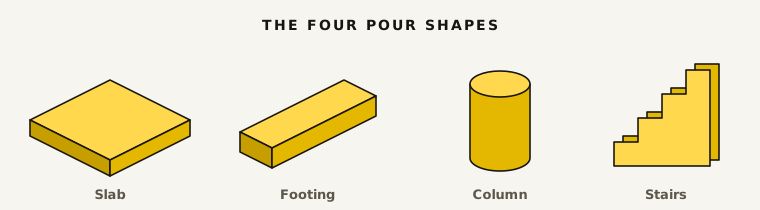
Pick the shape that matches your pour. A slab is a flat rectangular volume — length × width × thickness. A footing is a long, narrow strip poured below grade to spread a wall's load. A column (poured in a round sonotube form) is a cylinder. Stairs are treated as a stack of solid rectangular treads, each one taller than the last by one riser height.
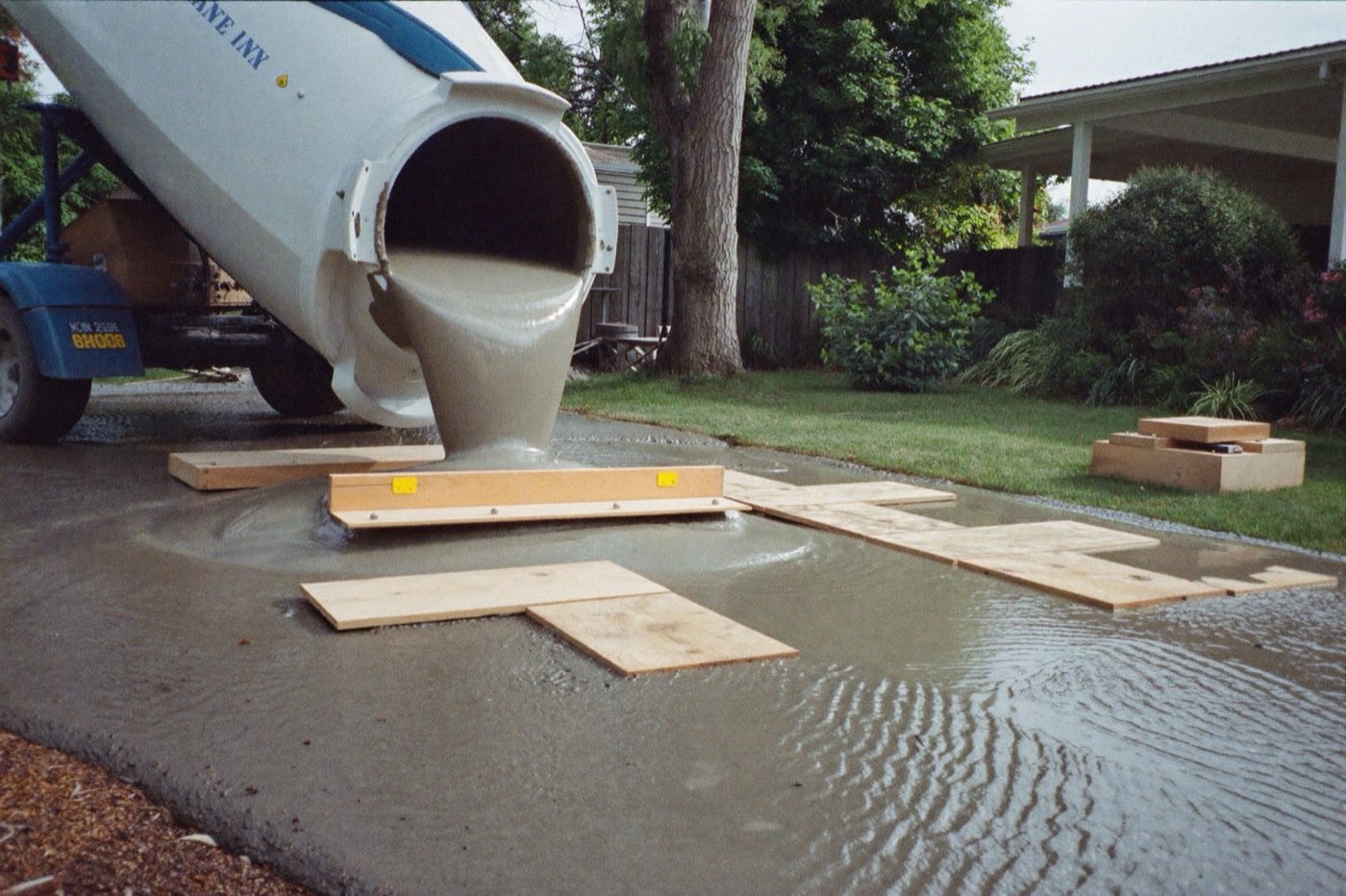
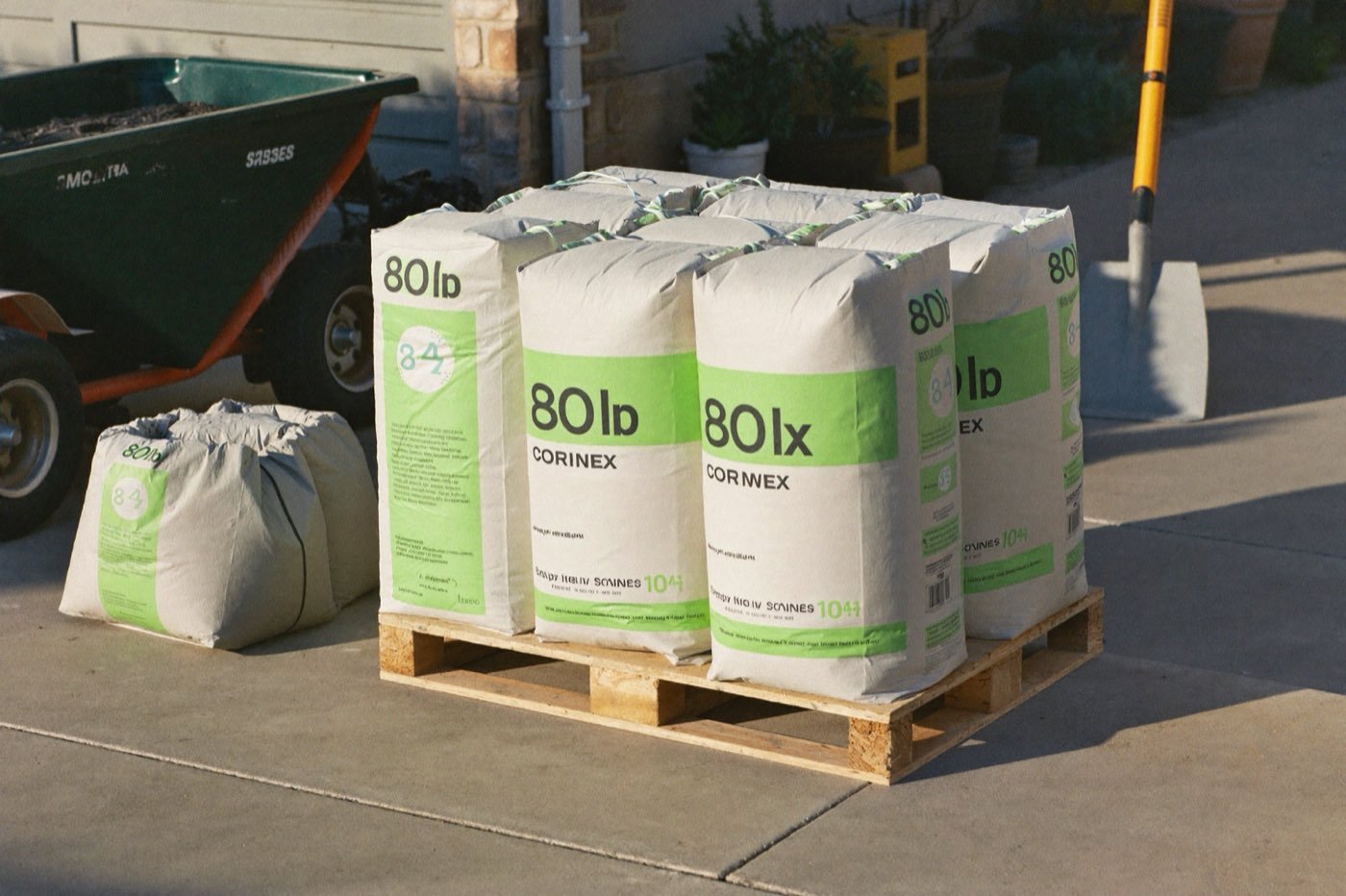
Whatever the shape, the calculator adds your waste percentage to cover spillage, an uneven subgrade, and the reality that you'd rather have a little extra on site than stop mid-pour for another bag run. It then converts that adjusted volume two ways: into cubic yards rounded up to the next quarter-yard (how ready-mix plants actually quote a load), and into a bag count for 80, 60, and 50-lb packaged concrete, rounded up to the next whole bag since you can't buy 61.4 bags. Because ready-mix plants sell by the cubic yard, every shape here is effectively a concrete yard calculator first — volume, then bags.
The results panel shows all three bag sizes side by side so you can compare trips to the store (fewer, heavier 80-lb bags vs. more, lighter 50-lb bags) before you commit, plus a bagged-vs-ready-mix cost comparison using your own editable prices.
The formula
Volume before waste, in cubic feet, depends on the shape:
Then, for every shape:
- volume with waste = volume × (1 + waste % ÷ 100)
- cubic yards = volume with waste ÷ 27
- ready-mix order = cubic yards, rounded UP to the next 0.25 yd³
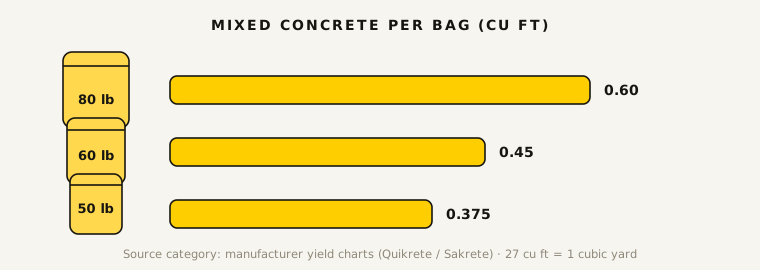
- bags = ROUND UP(volume with waste ÷ yield) — 0.60 ft³ (80 lb) / 0.45 (60 lb) / 0.375 (50 lb)
- water (gal) = bag count × 0.75 × (bag weight ÷ 80)
- weight (lb) = volume with waste × 150 lb/ft³
Cement calculator vs concrete calculator
People search for a cement calculator when they mean this page — worth 30 seconds to untangle, because at the store the words point at different shelves. Cement is the gray powdered binder; concrete is what you actually pour — cement plus sand, gravel aggregate, and water. A bag labeled "concrete mix" already contains everything except the water, which is why this calculator's bag counts assume concrete mix, not straight cement. Buy pure cement for a slab and you'd still need to batch the sand and aggregate separately — a masonry job, not a weekend pour. For slabs, footings, columns, and stairs, a concrete calculator is the right tool, whatever the search box was told.
Worked example: a 10×10 concrete slab
The calculator's own defaults: a 10 ft × 10 ft slab, 4 in thick, 10% waste, priced in 80-lb bags at $6.50 each with ready-mix at $165/yd³.
- 1. Volume before waste10 × 10 × (4 ÷ 12) = 33.3 ft³
- 2. With 10% waste33.3 × 1.10 = 36.7 ft³
- 3. Cubic yards36.7 ÷ 27 = 1.36 yd³ (1.04 m³)
- 4. Ready-mix order1.36 → next ¼ yd³ = 1.50 yd³
- 5. 80-lb bags36.7 ÷ 0.60 = 61.1 → 62 bags
- 6. Mixing water62 × 0.75 = 46.5 gallons
- 7. Bagged cost62 × $6.50 = $403.00
- 8. Ready-mix cost1.50 × $165 = $247.50
At 45 bags per yard (27 ÷ 0.60), that same 1.50 yd³ would take about 68 bags bought a full yard-equivalent at a time — but you only need 62, because the calculator sizes bags to your actual adjusted volume, not to a rounded-up yard count. That's the advantage of calculating bags directly instead of bags-per-yard × yards-ordered. Ready to price the whole installed job — mesh, forms, and labor included? The concrete slab cost calculator takes the same dimensions.
How many bags of concrete do I need? Common project sizes
Quick reference for typical US home projects, all at 4-inch slab thickness where a slab applies. Every row is computed with the exact formula above, includes the 10% default waste, and rounds up to whole 80-lb bags. (A cubic yard — the unit ready-mix is sold in — is 27 cubic feet, about 0.76 m³.)
| PROJECT | POUR SIZE | VOLUME* | 80-LB BAGS |
|---|---|---|---|
| Small equipment pad | 4 × 4 ft · 4 in | 0.22 yd³ | 10 |
| Hot-tub / AC pad | 8 × 8 ft · 4 in | 0.87 yd³ | 40 |
| Patio | 10 × 10 ft · 4 in | 1.36 yd³ | 62 |
| Large patio | 12 × 12 ft · 4 in | 1.96 yd³ | 88 |
| Single-car driveway strip | 10 × 20 ft · 4 in | 2.72 yd³ | 123 |
| Deck footing, 12-in sonotube | ⌀ 12 in × 4 ft (each) | 0.13 yd³ | 6 |
| Fence-post hole | ⌀ 8 in × 24 in (each) | ≈ 0.02 yd³ | 1–2† |
* Includes 10% waste. † One bag after subtracting a 4×4 post from the hole; two if you fill the full hole. Run your own dimensions above — thickness changes these numbers fast.
Bags or a ready-mix truck?
The math says bags cost more per yard — at the default $6.50 a bag, bagged concrete works out to about $292.50 per cubic yard (45 bags × $6.50) against a typical $165 per yard delivered. So why does anyone buy bags? Because ready-mix plants charge a short-load fee, commonly $75–$200, on small orders — and because a truck needs somewhere to park and a crew ready to move fast when the chute starts pouring.
The other half of the decision is labor you don't see on a receipt: one cubic yard is forty-five 80-lb bags — roughly 3,600 pounds of material through a wheelbarrow or rented mixer, one bag at a time, before the first batch starts to set. That's manageable for a footing; it is not a realistic Saturday for a driveway. One more decision worth a minute before any re-pour: if the old slab is intact and merely sunken, lifting it costs less than replacing it — the concrete leveling cost guide prices that comparison.
| Under ~1 yd³ | Bags — beats short-load fees; one pickup trip |
| 1–2 yd³ | Either — get a short-load quote before deciding |
| Over ~2 yd³ | Ready-mix truck — 90+ hand-mixed bags is not a weekend |
| Bag (Quikrete / Sakrete mix) | Stated yield | Bags per yd³ |
|---|---|---|
| 80 lb | 0.60 ft³ | 45 |
| 60 lb | 0.45 ft³ | 60 |
| 50 lb | 0.375 ft³ | 72 |
Both major US brands print the same yields on standard concrete mix — confirm against your exact bag, since fast-setting and fiber mixes can differ.
The calculator's results panel already runs this comparison with your quantities and your prices — the CHEAPER tag and the bagged $/yd³ break-even line are exactly this table, computed live.
Assumptions & defaults
| Waste / overage | 10% default (0–25% adjustable) |
| 80-lb bag yield | 0.60 ft³ |
| 60-lb bag yield | 0.45 ft³ |
| 50-lb bag yield | 0.375 ft³ |
| Mixing water | 0.75 gal per 80-lb bag, scaled by weight |
| Ready-mix order rounding | Up to the next ¼ yd³ |
| Concrete density (weight line) | 150 lb/ft³ · normal-weight mix |
| Bag price (editable) | $6.50 (80 lb) / $5.10 (60 lb) / $4.35 (50 lb) |
| Ready-mix price (editable) | $165 per yd³ delivered |
Waste defaults to a conservative 10% because running short mid-pour means a rushed extra bag run (or a visible cold joint), while running slightly long almost never costs you anything. Bag yields and the water-per-bag figure come from packaged-concrete manufacturer instructions, not a rounded guess — see Sources below. Every price field is a labeled, editable national-average estimate, reviewed July 2026; overwrite any of them with your own supplier's numbers and the estimate updates immediately. A slab also needs a compacted base underneath — size that separately with the gravel calculator.
Sources & standards
Bag-yield figures (cubic feet of mixed concrete per bag) reflect the values printed on packaging and published technical data sheets by Quikrete and Sakrete, the two packaged-concrete brands most widely stocked at US home centers. Reinforcement guidance references ACI CODE-332, Code Requirements for Residential Concrete, published by the American Concrete Institute. Cold-weather guidance follows ACI 306R, Guide to Cold Weather Concreting. Ready-mix ordering conventions (minimum loads, short-load fees) reflect standard industry practice as described by the National Ready Mixed Concrete Association (NRMCA). Prices are editable national-average estimates, reviewed July 2026 — see how our price reviews work.