Paver Calculator
This paver calculator gives you a full patio takeoff in one pass: paver count sized to your pattern's real waste factor, base gravel and bedding sand in cubic yards and tons, and polymeric sand bags — plus the excavation depth to dig to before any base goes down.
Price edits are remembered on this device — no account, nothing sent anywhere.
≈ $5.41/sqft · excludes edging product & labor
Estimates only, not quotes. Prices are editable national averages — confirm current pricing and quantities with your supplier before you buy.
How this paver patio calculator works
Enter your patio as a length × width rectangle or, for an odd-shaped space, just type the total square footage you've already measured (add an L-shaped area as two rectangles first). Pick a paver size — four common sizes are built in, or enter a custom width and length — and a layout pattern, which automatically fills in a realistic cutting-waste percentage for that pattern (you can still override it).
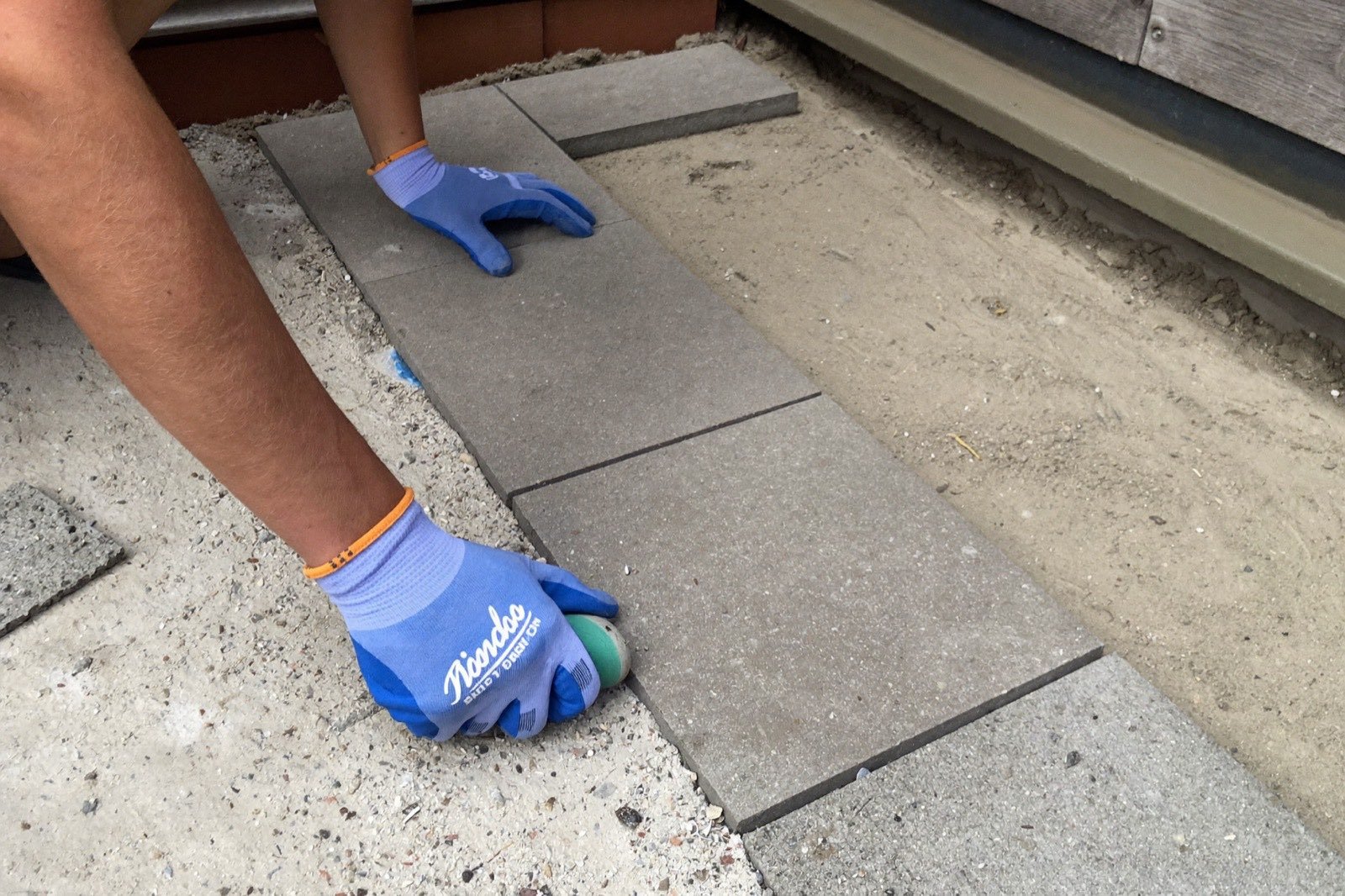
From area and paver size, the calculator works out how many pavers to buy, rounded up to a whole paver. Base gravel and bedding sand are calculated from the same area: gravel volume gets a 15% compaction allowance since a tamped base settles below its loose-poured depth, and bedding sand is fixed at a 1-inch layer regardless of base depth, which is standard practice for leveling pavers on top of the compacted base.
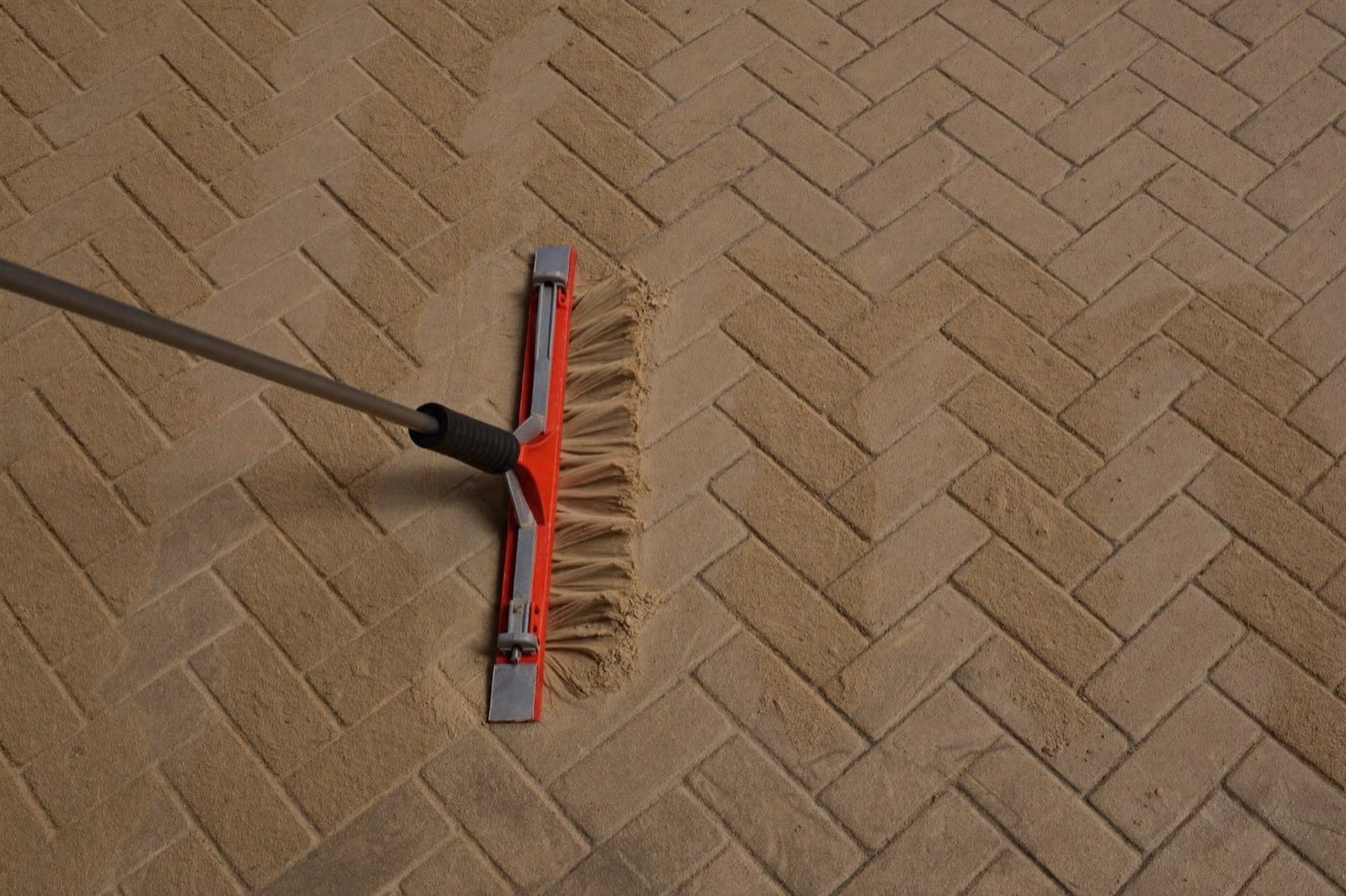
Polymeric sand — swept into the joints, not the bed — is priced by the bag using a standard 60-sqft-per-bag coverage rate, and the results also add up the total dig depth: paver thickness, the 1-inch sand layer, and your chosen base depth, so you know how far down to excavate before any base material goes in.
The formula
Worked example: a 12×14 paver patio
The calculator's own defaults: a 12 ft × 14 ft patio, 4×8 in pavers, running bond (5% waste), a 6 in base, and polymeric sand included.
- 1. Area12 × 14 = 168 sqft
- 2. Paver area(4 × 8) ÷ 144 = 0.222 sqft each
- 3. Pavers(168 ÷ 0.222) × 1.05 = 793.8 → 794 × $0.75 = $596
- 4. Base gravel168 × (6÷12) ÷ 27 × 1.15 = 3.58 yd³ → 5.01 t → $225
- 5. Bedding sand168 × (1÷12) ÷ 27 = 0.52 yd³ → 0.70 t → $13
- 6. Polymeric sand168 ÷ 60 = 2.8 → 3 bags → $75
- 7. Excavation depth2.375 + 1 + 6 = 9.38 in
- 8. Total$596 + $225 + $13 + $75 = $909 ($5.41/sqft)
Switching only the pattern to herringbone (10% waste, same 168 sqft) raises the paver count to 832 — 38 more pavers, about $28 more — purely from the extra angled cuts a 45° herringbone layout requires along every edge.
Assumptions & defaults
| Waste by pattern (editable) | Running bond / basketweave 5% · herringbone 10% · circular 15% |
| Paver thickness | 2⅜ in (60 mm), fixed |
| Bedding sand depth | 1 in, fixed |
| Base compaction | +15% over loose volume |
| Gravel / sand density | 1.4 / 1.35 tons per yd³ |
| Polymeric sand coverage | 60 sqft per bag |
| Prices (editable) | Paver $0.75 · gravel $45/t · sand $18/t · poly $25/bag |
Paver thickness and bedding-sand depth aren't collected as inputs because they're standardized enough across pedestrian concrete pavers to treat as fixed assumptions — see Sources below. Gravel and sand quantities round to two decimals before cost is calculated, so every line multiplies out exactly as printed. Every price field is a labeled, editable national-average estimate, reviewed July 2026.
How many pavers per square foot, by paver size
| Paver size | Area each | Pavers per sqft |
|---|---|---|
| 4 × 8 in (Holland) | 32 in² | 4.50 |
| 6 × 6 in | 36 in² | 4.00 |
| 6 × 9 in | 54 in² | 2.67 |
| 12 × 12 in | 144 in² | 1.00 |
Divide 144 by the paver's W × L in inches — that's the whole trick, before the pattern's waste factor from the waste factors reference goes on top. Under the pavers, the paver base calculator math is the same area-times-depth volume the gravel calculator runs — 4 in of compacted base for a patio, more for anything a vehicle touches — and the paver sand calculator layer is a fixed 1 inch of bedding sand, both already included in this page's output. If the patio loses out to a poured slab, the concrete calculator prices that alternative in bags and yards.
Sources & standards
Base depth, bedding-sand depth, and edge-restraint guidance follow Interlocking Concrete Pavement Institute (ICPI) Tech Spec technical bulletins for pedestrian and vehicular segmental pavement. Paver thickness (2⅜ in / 60 mm) reflects the standard dimension published in concrete-paver manufacturer technical specifications for pedestrian applications. Aggregate and sand density figures reflect published aggregate-supplier product data sheets. Polymeric sand coverage-per-bag reflects manufacturer bag-label coverage charts; actual coverage varies with joint width and paver size, so check your specific product's label before ordering. Prices reviewed July 2026 — see how our price reviews work.