Gravel Calculator
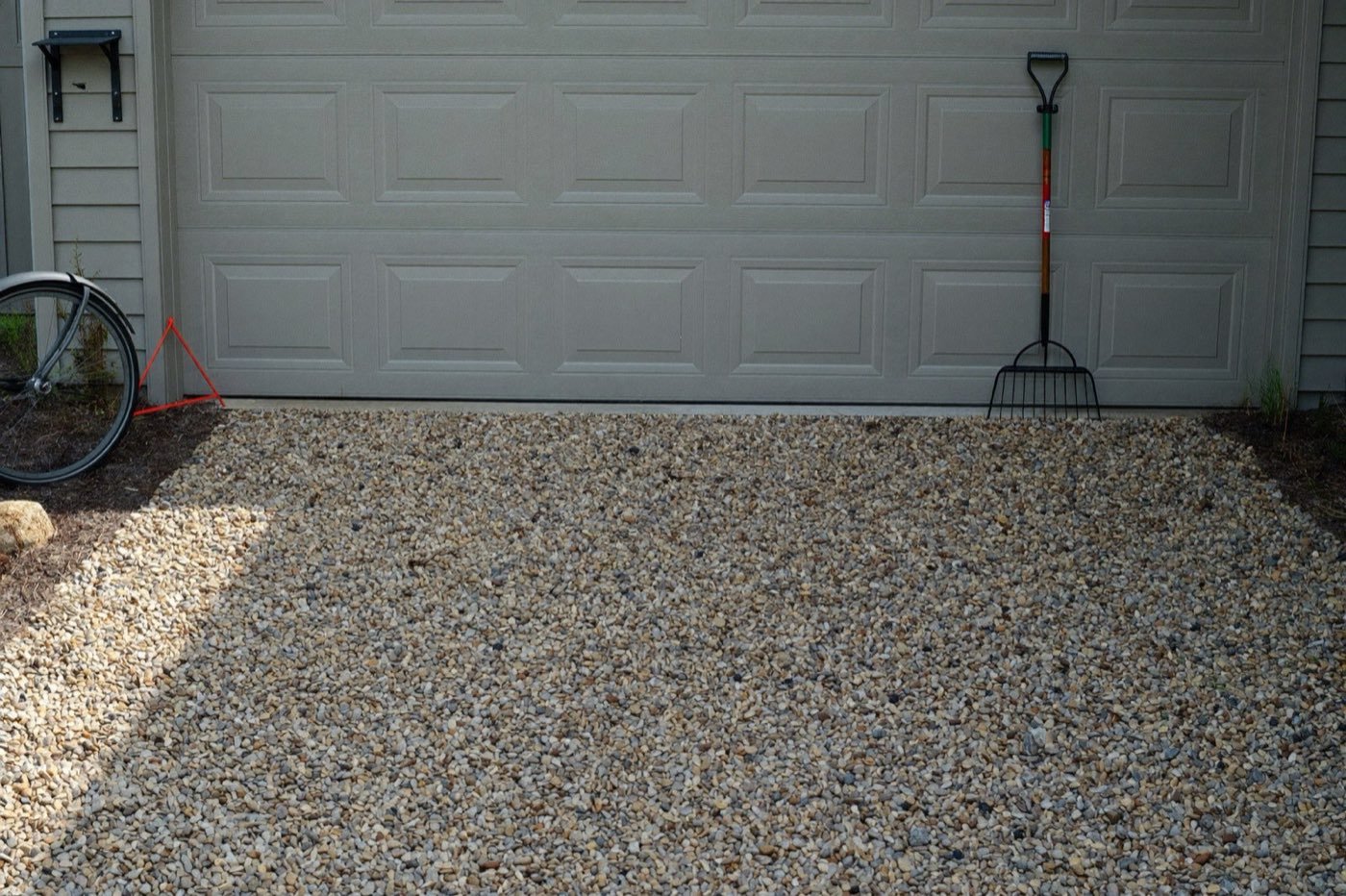
This gravel calculator converts a length, width, and depth into the cubic yards and tons you'll actually order — for a driveway base, a drainage bed, a path, or a fire pit ring. Pick a material and the calculator adjusts for density and compaction automatically, then prices the load against a bagged alternative.
Price edits are remembered on this device — no account, nothing sent anywhere.
regional band ±15%: $163 – $221
Estimates only, not quotes. Prices are editable national averages — confirm current pricing and quantities with your supplier before you buy.
How this gravel, stone and rock calculator works
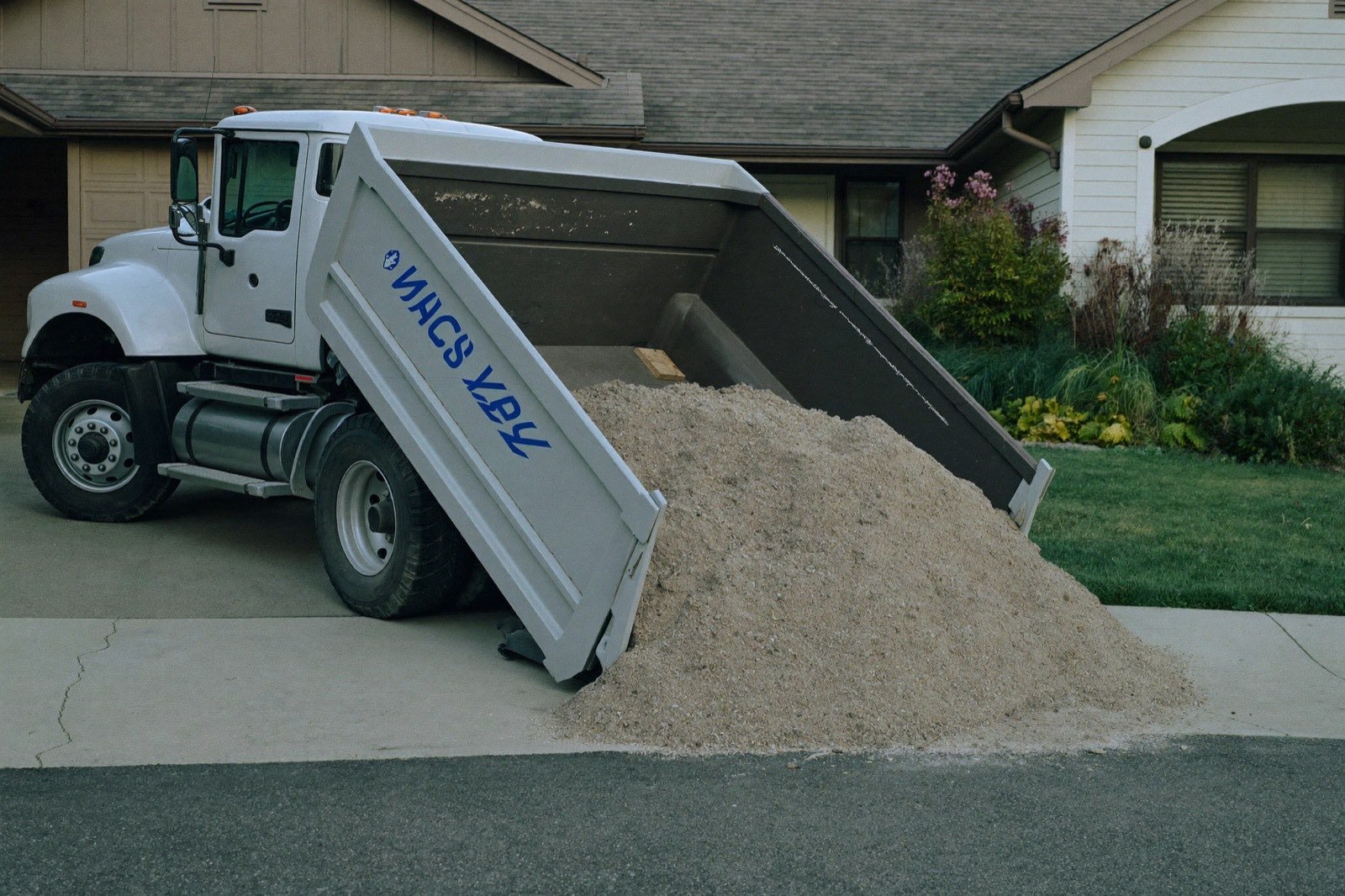
Gravel is sold by weight (tons) but measured by volume, so this calculator converts between the two in one pass, matching how most aggregate suppliers quote and deliver.
Start with the shape of the space — a straight rectangle, a circle for a fire pit ring or tree well, or multiple sections added together for an L-shaped or irregular area. Multiply that area by your depth (converted from inches to feet) to get a loose volume in cubic feet, then divide by 27 to get cubic yards, the unit most suppliers price bulk orders by.
If the compaction/overage box is checked, the calculator adds 15% to that volume, because loose gravel settles once it's spread and tamped — the yardage you order needs to already account for that settling, not just fill today's hole. It's turned on automatically for crusher run and road base, since those are almost always compacted into a structural base, and left off for materials used as a loose decorative layer.
From cubic yards, multiplying by the material's density converts to tons — the unit most suppliers actually invoice. The calculator also shows a bagged-gravel equivalent using a standard 0.5-cubic-foot retail bag, useful for small jobs where a bulk delivery minimum doesn't make sense.
The formula
Worked example: a 10×20 driveway bed
Using the calculator's own defaults: a 20 ft × 10 ft gravel parking pad, 3 in deep, crushed stone #57, no compaction allowance, at $45/ton with a flat $75 delivery fee.
- 1. Area20 × 10 = 200 sq ft
- 2. Loose volume200 × (3 ÷ 12) = 50 cu ft
- 3. Cubic yards50 ÷ 27 = 1.85 cu yd (compaction off)
- 4. Tons1.85 × 1.40 = 2.6 tons
- 5. Bagged alternative(1.85 × 27) ÷ 0.5 = 100 bags
- 6. Cost(2.6 × $45) + $75 = $192 typical · $163–$221 band
Assumptions & defaults
Material density & compaction default
| Crushed stone (#57) | 1.40 t/yd³ · compaction off |
| Pea gravel | 1.40 t/yd³ · off |
| Crusher run / road base | 1.50 t/yd³ · ON |
| Decomposed granite | 1.40 t/yd³ · off |
| River rock | 1.35 t/yd³ · off |
| Sand | 1.35 t/yd³ · off |
Depth by application & price basis
| Decorative path / topping | 2–3 in |
| Shed pad, paver base (no vehicles) | 4 in |
| Driveway, compacted lifts | 6–8 in |
| Price per ton (editable) | $45.00 |
| Price per cubic yard (editable) | $63.00 |
| Delivery fee (editable) | $75 flat |
All prices are editable national-average estimates, not a live quote — overwrite them with your own supplier's pricing before you buy. Prices reviewed July 2026.
How much area does a ton of gravel cover?
| Depth | Sqft per ton | Sqft per yd³ |
|---|---|---|
| 2 in (top-dressing) | ~116 | 162 |
| 3 in (path) | ~77 | 108 |
| 4 in (driveway lift) | ~58 | 81 |
| 6 in (heavy base) | ~39 | 54 |
Straight geometry at 1.4 tons per cubic yard — crushed stone's typical density; pea gravel runs similar, crusher run nearer 1.5, lava rock far less. One ton at 2 inches covers a parking-space-sized patch; at 6 inches it covers a third of that. Compacted base courses also need the 15–20% loose-extra explained in the waste and compaction reference — it's compaction, not waste.
Pricing the finished surface instead of the stone? A paved driveway is priced per-slab on the concrete slab cost calculator, and a paver path's base layer comes straight from the paver calculator using this same math.
Sources & standards
Aggregate size designation follows ASTM D448, Standard Classification for Sizes of Aggregate for Road and Bridge Construction — the source of the "#57" stone gradation used in the material list. Density and coverage figures are cross-checked against published aggregate-supplier product data sheets and state DOT aggregate base specifications. Dump-truck payload context reflects typical tandem-axle legal gross-weight limits under state DOT and Federal Bridge Formula rules. Prices are editable national averages, reviewed July 2026 — see how our price reviews work.