TallyTakeoff

Drywall Calculator

This drywall calculator knows drywall is never just sheets — it's sheets plus the joint compound, tape, screws, and corner bead that actually finish the walls, and most calculators only give you the first one. Enter your room's dimensions and get a complete hang-and-finish materials list, with sheet counts compared across all three common panel sizes.

Hang + finish, complete listPrices editable · reviewed July 2026All three panel sizes compared
4×8 sheets, staggered17 sheets492 sqft to hang
Sheet size (sets price)
Prices — editablenational averages · reviewed July 2026

Price edits are remembered on this device — no account, nothing sent anywhere.

YOU NEED492 SQFT · +10%
17sheets
or 4×10: 14 · 4×12: 12
joint compound (4.5-gal)2 buckets
joint tape (500 ft)1 roll
screws (1¼ in)2 lb
Materials subtotal$279

regional band ±12%: $246$312

Estimates only, not quotes. Prices are editable national averages — confirm current pricing and quantities with your supplier before you buy.

Plain-English tour

How to calculate how much drywall you need

Start with the area you're covering: the four walls (twice the sum of length and width, times height) plus the ceiling if you're hanging it too, minus real allowances for doors (21 sq ft) and windows (15 sq ft) rather than ignoring them.

That net area gets a waste allowance — 10% by default — before it sizes the sheet count, because waste in drywall is almost entirely cut-offs at the ends of a run and breakage in handling, not the mud or screws. That's why the waste percentage only inflates the sheet count, not the compound, tape, or screw quantities. Four more materials scale off the same net area using standard trade coverage rules: compound by the area one bucket finishes across three coats, tape by linear feet per 1,000 sq ft of board, screws by the area one pound fastens at 16-inch spacing, and corner bead cut into 8-ft sticks.

Everything sold by the piece — sheets, buckets, rolls, pounds, sticks — rounds up to the next whole unit. You can't buy 16.9 sheets of drywall.
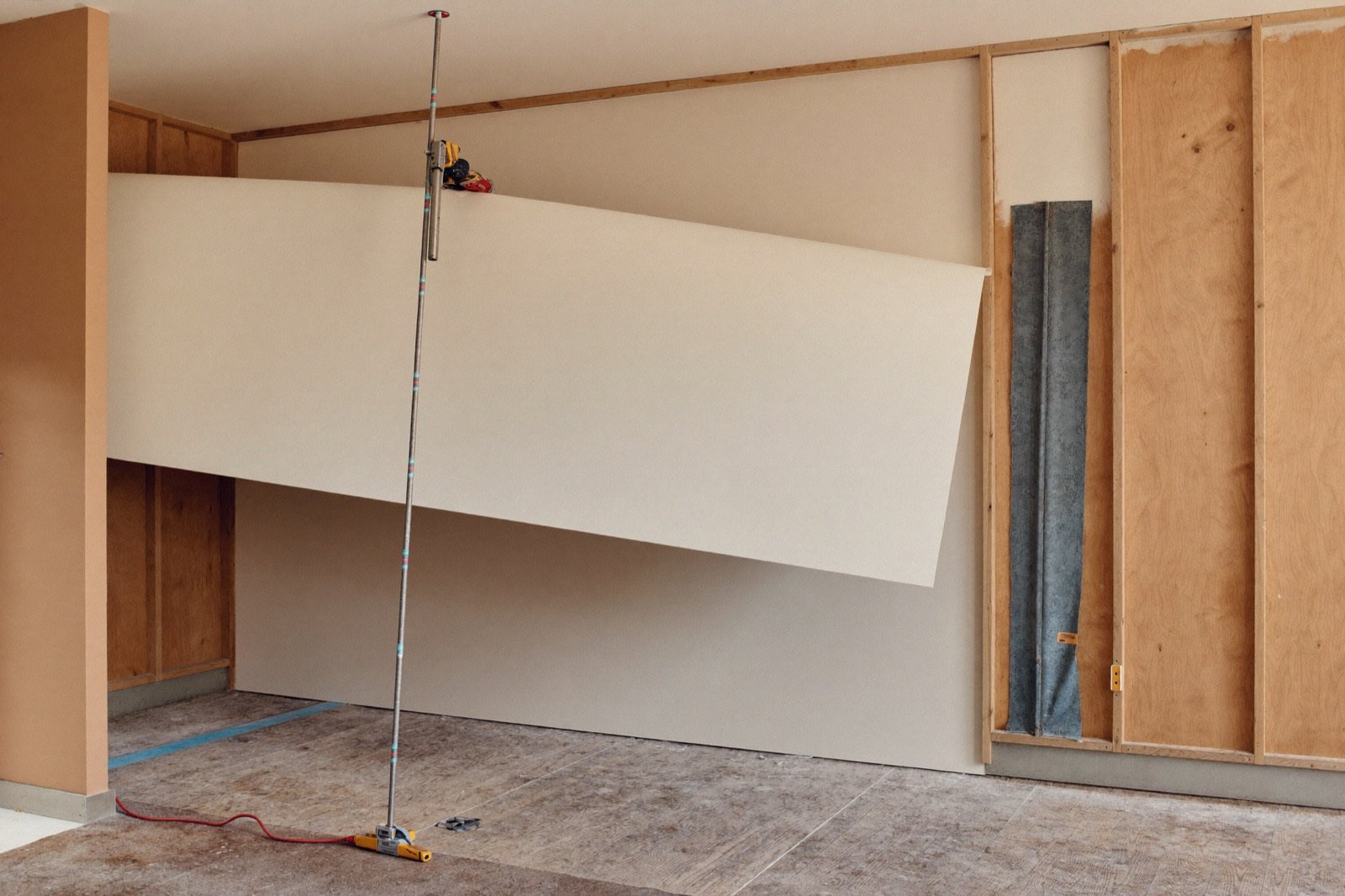
Hanging a drywall sheet on a wood-framed wall — a drywall calculator counts sheets by panel size
4×8 sheets cover 32 sq ft; 4×12 sheets mean fewer butt joints to finish.
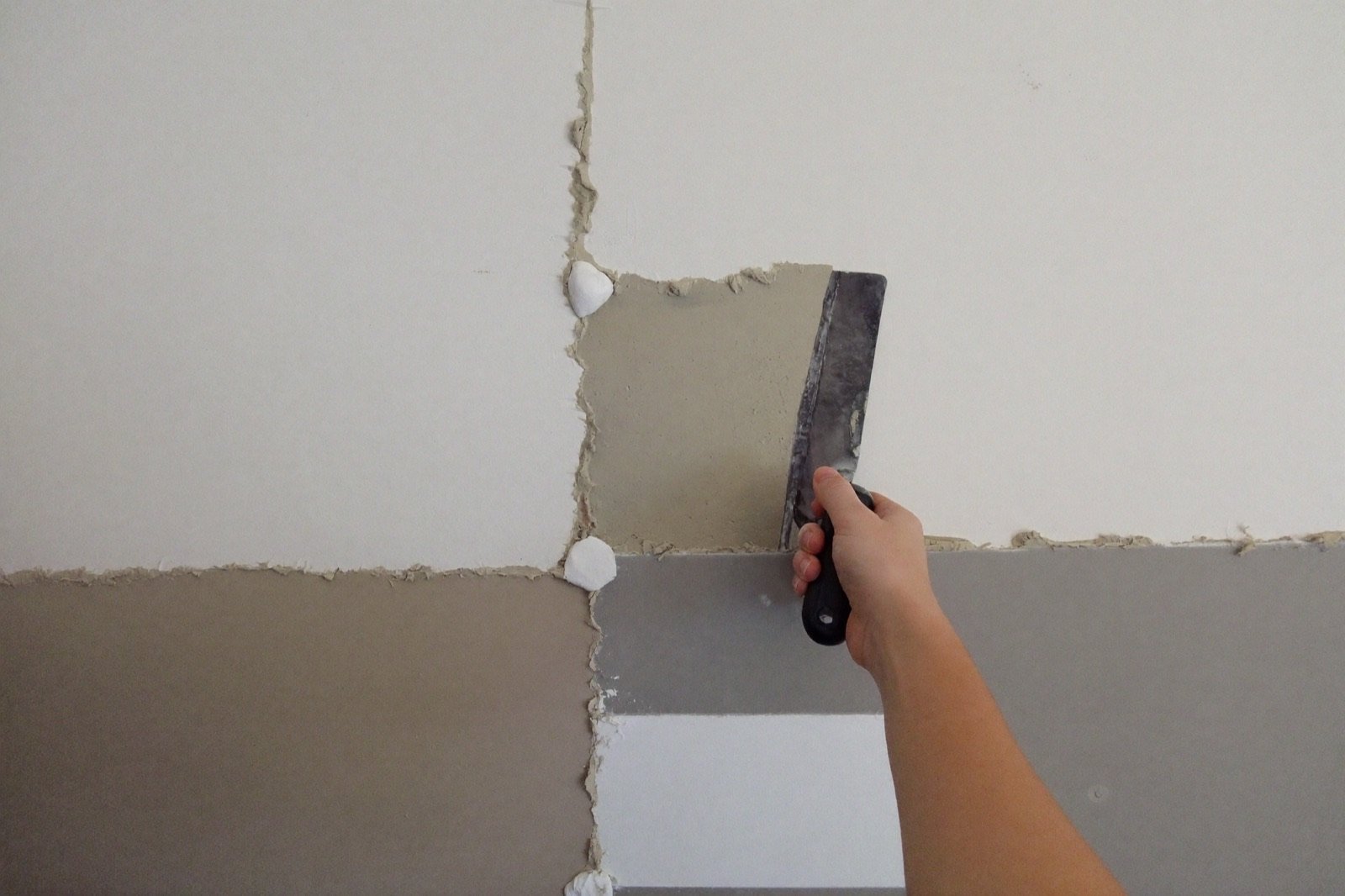
Taping and mudding drywall joints with a finishing knife — joint compound, tape and screws estimated per 1,000 sq ft
Mud, tape and screws are where drywall budgets quietly leak.
Show the math

The formula

net area = 2(L + W) × H + L × W ceiling − doors × 21 − windows × 15
sheets = ROUND UP(net × (1 + waste) ÷ sheet sqft) — 32 / 40 / 48
compound = net ÷ 450 per bucket · tape = net × 0.37 ÷ 500 ft
screws = net ÷ 300 per lb · bead = corners × 8 ft sticks
With the defaults

Worked example: drywall sheets for a 12×12 room

The calculator's own defaults: a 12 ft × 12 ft room, 8 ft walls, ceiling included, one door, one window, 4×8 sheets, 10% waste, no outside corners.

  1. 1. Gross walls2 × (12 + 12) × 8 = 384 sqft
  2. 2. Plus ceiling+ 144 → 528 sqft
  3. 3. Minus openings− 21 − 15 → net 492 sqft
  4. 4. With 10% waste492 × 1.10 = 541.2 sqft
  5. 5. Sheets4×8: 17 · 4×10: 14 · 4×12: 12
  6. 6. Compound / tape2 buckets · 1 roll
  7. 7. Screws / bead2 lb · 0 sticks
  8. 8. Materials subtotal$221 + $36 + $6 + $16 = $279 ($246–$312 band)

Switching to 4×12 sheets drops the count from 17 to 12 — five fewer full-length joints to tape and mud — at the cost of needing two people to carry each panel.

What we assume

Assumptions & defaults

Drywall calculator assumptions
Door / window opening21 sqft · 15 sqft each
Waste10% default — sheets only
Compound coverage450 sqft per 4.5-gal bucket, three coats
Tape usage~370 ft per 1,000 sqft · 500-ft rolls
Screw coverage300 sqft per lb at 16-in spacing
Corner bead8-ft sticks, outside corners only
Prices (editable)Sheet $13/$16/$19 · bucket $18 · tape $6 · screws $8/lb · bead $4

All prices are editable national-average retail estimates, reviewed July 2026.

Derived from this calculator

How many drywall sheets for common room sizes

4×8 drywall sheet counts by room size, walls only at 8 ft, 10% waste, openings not deducted
Room (8 ft walls)Wall sqft4×8 sheets
10 × 10 ft32011
12 × 12 ft38414
12 × 16 ft44816
15 × 20 ft56020

Walls only, 10% waste, ceiling off, openings not deducted — the calculator above nets all of that out for your real room. The 10% figure is the standard drywall waste factor from the waste factors reference; once the board is hung and finished, the paint calculator knows fresh drywall drinks primer, and the whole approach follows the five-step takeoff method.

Where the numbers come from

Sources & standards

Joint compound, tape, and screw coverage rules follow the finishing-guide figures published by drywall manufacturers and industry references — USG's and National Gypsum's installation and finishing guides, and the Gypsum Association's GA-216 application-and-finishing standard, are the category of document these per-1,000-sq-ft figures are drawn from. Door and window opening allowances follow standard residential estimating figures. Prices reviewed July 2026 — see how our price reviews work.

Before you hang

Frequently asked questions

Should I hang the ceiling or the walls first?
Ceiling first. Ceiling panels are heavier to maneuver and need the wall panels' top edges clear to butt cleanly against — hanging walls first means fighting ceiling sheets past panels that are already in the way. It also lets the top wall sheet help support the ceiling sheet's edge at the joint.
What are drywall finishing levels 1 through 5?
They're the Gypsum Association's standard scale for how much taping and mud work a wall gets before paint. Level 0 is unfinished, Level 1 is tape embedded only (common above a garage or in an attic), Level 4 is the standard for flat paint and most homes, and Level 5 — a full skim coat over the whole surface — is reserved for gloss paint or critical raking light where every seam has to disappear.
How far apart should drywall screws be spaced?
Standard spacing is every 16 inches along wall framing (12 inches on ceilings, since ceiling panels sag more over time), with screws no closer than 3/8 inch from a panel edge and driven just enough to dimple the paper without tearing it. That spacing is what the 300-sq-ft-per-pound screw estimate in this calculator assumes.
Is a 4×12 sheet actually worth using over 4×8?
For fewer seams, yes — the worked example on this page drops from 17 sheets to 12 by switching to 4×12, meaning five fewer full-length joints to tape and mud. The tradeoff is real: a 4×12 half-inch sheet is unwieldy for one person and awkward in a stairwell or tight hallway, which is exactly why most crews reserve the largest panels for open runs and stick to 4×8 anywhere access is cramped.
How much does a sheet of drywall weigh, and does that matter for delivery?
A standard 1/2-inch 4×8 sheet weighs roughly 52 lb — moisture-resistant and 5/8-inch fire-rated panels run heavier. That matters for two things: how many people you need for a ceiling panel (two, minimum, for anything 4×8 or larger), and whether a supplier will deliver and stage the sheets on the right floor rather than leaving a pallet in the driveway for a large order.
Do I need corner bead on every wall corner?
Only outside corners — the ones that stick out into the room, like the end of a half-wall or a doorway's outer edge — need metal or paper-faced corner bead. Inside corners, where two walls meet going inward, are simply taped and mudded without bead. Leave the outside-corners count at 0 if your room is a plain rectangle.
Is Sheetrock the same as drywall?
Functionally yes — Sheetrock is USG's brand name for its gypsum panels, the way Kleenex is a brand of tissue. Prices track the generic product: a 'price of sheetrock' search and a drywall price check land on the same shelf. This calculator's sheet counts, compound, tape and screw quantities apply identically whichever brand your store stocks.
AFTER THE MUD DRIES
Walls hung and finished? Now paint them.
Paint Calculator